
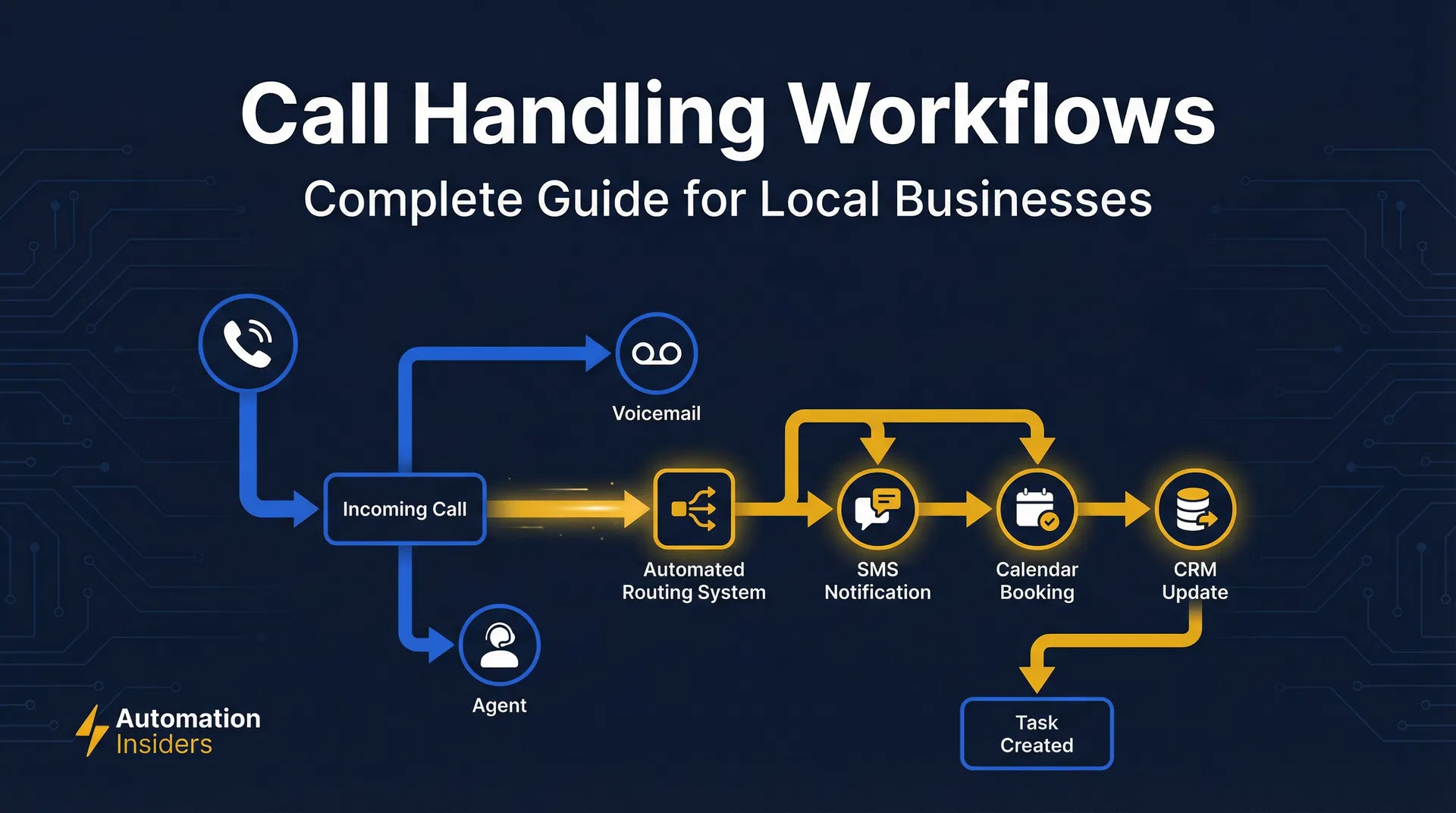
Your phone rings. It's a new lead, a potential customer ready to buy. But if your local service business—HVAC, dental, roofing, plumbing, auto repair, med spa, or chiropractic—doesn't have a good call handling workflow, that critical opportunity can quickly become a missed sale, a frustrated customer, and lost money. The problem isn't just how many calls you get; it's that you don't have a system to make sure every call is fast, effective, and profitable.
I've seen businesses spend thousands on advertising, only to watch leads disappear because their phone systems were a mess. You're leaving money on the table if your phone isn't working like a well-oiled machine. This guide gives you a practical, no-nonsense way to build a call handling workflow that works for your business. We'll use GoHighLevel to change how you connect with customers and help you grow.
The Hidden Costs of Bad Call Handling: Why This Matters to Your Bottom Line
Missed calls, long hold times, and calls sent to the wrong person aren't just small annoyances; they directly hurt your profits and reputation. One bad call is a direct hit to your bottom line. Think about a dental office in Miami that spends $75 per lead on Google Ads. If 20% of those calls are handled badly—sent to voicemail, hung up on after a long wait, or sent to the wrong person—that's $15 per lead wasted. This isn't just inconvenient; it's a financial drain that eats away at your marketing results.
Most HVAC companies often see the phone as a necessary evil, not a way to make money. Your phone is usually the first time a potential customer talks to you. It's where they decide if you're the right fit. A bad experience here can cost you a customer before you even know they called. To really understand the impact, figure out how much you might be losing. How many leads do you get, and what do you estimate each lead costs? Even a small percentage of mishandled calls can lead to huge losses. Use our Cost Per Lead (CPL) tool to see what each lead is worth to your business.
Breaking Down the Call: The 5 Key Steps of Your Call Handling Workflow
Every incoming call, from the first ring to the final follow-up, goes through a predictable path. You have to master each step for an effective call handling workflow. Skipping any step is like building a house with a leaky roof—you're going to have problems.
1. Answer: The First Impression
Answering the phone quickly is super important. Customers often call several businesses at once and will hang up after a few rings. A professional, consistent greeting sets the right tone, immediately telling them they've called the right place. Your goal is a quick, professional acknowledgment, whether it's a live person or an automated system. The best way is to have a strict 3-ring rule. If you can't answer within three rings, you need a backup plan right away.
For example, a busy auto repair shop in Dallas can't always pick up immediately during busy times. Their GoHighLevel system automatically sends a Missed Call Text Back message within 30 seconds. It says they missed the call and offers a link to book an appointment. This simple step saves leads that would otherwise be lost, turning a potential missed chance into a scheduled appointment. This isn't just about being polite; it's about getting more sales.
2. Qualify: Don't Waste Time
After you answer, quickly figure out what the caller needs. Are they a new lead, a service request, or asking about a bill? Calls that aren't qualified waste valuable staff time that could be spent on making money. Good qualification prioritizes calls and gathers important information upfront, maybe through specific questions or automated systems. The goal isn't to be rude, but to be efficient. Your time and your staff's time are money.
Create a short, 2-3 question script for qualifying calls. For example, a roofing company might ask: "Are you calling about a new roof, a repair, or an insurance claim?" This immediately guides the conversation, letting you quickly figure out what the caller needs and send them to the right person. This stops unnecessary transfers and makes sure they talk to the right person from the start.
3. Route: Getting Them to the Right Person, Fast
After you qualify the call, you need to send it to the right department or person. Good routing is key for happy customers; calls sent to the wrong place make people frustrated and waste time. You can route calls based on what they're calling about, their location, if they're an existing customer, or the time of day. Advanced systems can route based on who's available, what skills they have, or how valuable the customer is. The goal is to connect the caller with the best person on the first try.
Map out how you want calls to be routed. Use GoHighLevel's Automation section to build workflows that route calls based on the answers to your qualification questions, the time of day, or even the caller ID (for existing clients). For instance, a big chiropractic clinic with many doctors needs to send new patient calls to the front desk, but existing patient questions about billing should go to the administrative team. A well-set-up GoHighLevel workflow handles this smoothly, making sure the caller never feels like they're being bounced around or have to repeat their story.
4. Log: The Memory of Your Business
The fourth step is to log the call. This means writing down important details: why they called, who called, what you talked about, and what actions you took. Good logging is vital for accurate customer records, tracking interactions, and making sure service continues smoothly. This information is super valuable for looking back, following up, and understanding trends. Without proper logging, your business risks losing important data, which leads to asking the same questions repeatedly, missing commitments, and customers feeling like you don't know them. If it's not logged, it didn't happen. Period.
Modern CRM systems, like GoHighLevel, automate this. They capture call details and put them into one customer profile. Every call, text, and email is automatically recorded, giving your team a full view of every customer interaction. This isn't optional; it's essential for building lasting customer relationships and making smart business decisions.
5. Follow Up: The Conversion Multiplier
The last step, often forgotten, is follow-up. This includes things you do after the call, like sending confirmations, scheduling appointments, or checking if the customer is happy. Most plumbing shops get the call right but mess up the follow-up, losing potential sales. Good follow-up shows you care, builds relationships, and gives you valuable feedback. Ignoring it undoes all your hard work, makes customers feel unimportant, and sends them straight to your competitors.
Set up automated follow-up sequences. For a new lead, this might be an immediate text with a link to your services, followed by an email with a case study. For a missed appointment, it's an automated reminder. The 5-minute follow-up rule is critical for turning leads into loyal customers. A med spa in Scottsdale, for example, uses GoHighLevel to send an automated text to new callers who don't book on the first call, offering a special discount for a consultation. This simple automation boosted their booking rate by 15%, proving that consistent follow-up really helps you get more sales.
Choosing Your Weapon: Types of Call Handling for Most HVAC Companies
There's no single perfect way for your business to handle calls. The best approach depends on how many calls you get, your budget, and what your customers expect. Knowing the pros and cons of each method is key to making a smart decision for your business.
1. Live Answer: The Personal Touch (and its limits)
Live answer means a real person answers your calls. This offers the most personal touch and immediate interaction. It's great for complicated questions, urgent situations, and building a connection. However, relying only on live answer in a busy local business often means missed chances and higher costs. It uses a lot of resources, needing staff availability and training, which can be expensive for many local service businesses. While it's great for services that need a lot of personal attention, it's rarely something you can scale up on its own.
2. Interactive Voice Response (IVR): The Automated Gatekeeper
An Interactive Voice Response (IVR) system is automated phone technology that lets callers interact using voice commands or keypad presses. IVR systems route calls, give basic information, or collect data without a person involved. This makes things more efficient by directing callers or answering common questions. While IVR cuts down on staff costs and handles lots of calls, a badly designed system can frustrate callers with complicated menus. Keep it simple and easy to use. Test it yourself, many times, to make sure customers have a smooth experience and to avoid putting a barrier between you and them.
3. Voice AI Agent (GoHighLevel's Conversation AI): The Future is Now
Old-school IVR is clunky and impersonal. Live agents are expensive and can't be there 24/7. GoHighLevel's Conversation AI (or Voice AI Agent) is a huge advantage. Unlike basic IVR, Voice AI uses natural language processing (NLP) and machine learning to understand and respond like a human. These smart systems handle questions, qualify leads, book appointments, and solve common problems without a person. Voice AI is available 24/7, gives consistent service, and greatly cuts down on operating costs. This isn't just a trend; it's where the industry is going. Ignoring Voice AI now is like ignoring the internet in the 90s – you'll be left behind. For example, a busy plumbing company uses a Voice AI Agent to answer calls after hours. This AI can figure out if it's an emergency or not, and even book appointments directly into their calendar. This means they get leads 24/7 without paying overtime, making sure no potential customer is ever turned away.
4. Missed Call Text Back: Your Essential Safety Net
Every missed call is a lost opportunity. Missed Call Text Back is a proactive way to get back to unanswered calls right away. When you miss a call, the system automatically sends a text saying you missed it and offers other ways to connect, like an appointment link, a way to ask for info, or a direct message. This feature is crucial for busy HVAC companies with limited staff. It prevents lost leads and keeps your sales pipeline full. A busy salon, for instance, often misses calls during peak hours. Their GoHighLevel Missed Call Text Back automatically sends a text: "Sorry we missed you! How can we help? You can also book online here: [link]." This simple automation recovers a lot of missed calls, turning them into booked appointments. Set up Missed Call Text Back in your GoHighLevel Automation section today; it's a must-have for getting back leads. Learn more in our Missed Call Text Back Complete Guide.
Mapping Your Current Call Flow and Plugging the Leaks
You can't fix what you don't understand. Most businesses have hidden leaks in their call handling process, losing customers and money without even knowing it. Making your call handling workflow better starts with an honest look at what you're doing now. Many HVAC companies rely on informal systems, which leads to inefficiency and missed chances. Mapping your call flow—writing down every step from when a call comes in to when it's resolved—is crucial for finding these leaks before they sink your business.
To effectively map your call flow and identify where you're losing leads, follow these actionable steps:
- Trace the Caller's Journey: Meticulously document every possible path a call can take from the moment the phone rings. Include calls that are answered, sent to voicemail, transferred, hung up on, or routed to an automated system. Don't skip any scenario.
- Identify Decision Points & Handoffs: Pinpoint exactly where calls are routed and the criteria for those decisions. Who transfers calls? Are there points where information is repeated or lost between staff or systems? These handoffs are prime locations for friction and dropped calls.
- Quantify Delays: Track average answer times, hold times, and time for follow-up actions. Even small delays of 30 seconds can lead to significant lead loss. Your customers are impatient; every second counts.
- Analyze Missed Call Protocols: What actually happens when a call isn't answered? Is it a black hole where leads disappear into generic voicemail, or does an automated system re-engage the caller? This is a critical leak point for most plumbing shops.
- Gather Feedback: Consult team members and survey customers for insights into bottlenecks and inefficiencies. Their firsthand experience is invaluable.
With a clear map, identify "leaks"—points of dropped calls, frustrated customers, or lost opportunities. These include long hold times, misdirected calls, inadequate logging, and neglected follow-ups. Addressing these transforms call handling from a reactive chore into a proactive business asset.
How GoHighLevel Builds the Entire Workflow in One Platform
Managing multiple call handling tools is challenging for the average HVAC company, leading to fragmented information, inefficiencies, and disjointed customer experiences. GoHighLevel solves this by offering an all-in-one platform that integrates every call handling stage and type into a unified, automated workflow.
GoHighLevel centralizes business communications, combining phone systems, CRM, and marketing automation. This allows you to design and execute sophisticated call handling workflows from a single dashboard. For example:
- Incoming calls are automatically logged in your CRM, updating or creating contacts.
- Callers are qualified via intelligent IVR or Voice AI.
- Calls are routed to the right team member based on availability, skills, or caller history.
- Missed calls trigger automated Missed Call Text Back sequences, engaging leads.
- Post-call follow-ups are automated, sending confirmations or relevant information via email/SMS.
- All interactions (calls, texts, emails, appointments) are logged in the customer's CRM profile, providing a 360-degree view.
This integration and automation eliminate manual tasks and errors, ensuring a consistent, professional, and highly efficient customer experience. GoHighLevel helps the average HVAC company reclaim lost leads, improve satisfaction, and scale operations without extra staff or complex software.
Comparing Call Handling Methods
To highlight GoHighLevel's benefits, let's compare call handling methods:
| Feature | Traditional Live Answer | Basic IVR System | Standalone Voice AI | GoHighLevel Integrated Workflow |
|---|---|---|---|---|
| Initial Cost | High (staff salaries) | Moderate | High | Moderate (subscription) |
| Ongoing Cost | High | Low | Moderate | Moderate (subscription) |
| 24/7 Availability | No (unless multiple shifts) | Yes | Yes | Yes |
| Personalization | High | Low | Moderate | High |
| Efficiency | Moderate | Moderate | High | Very High |
| Lead Capture | Manual | Basic | Automated | Automated & Integrated |
| Follow-up | Manual | Manual | Basic Automation | Automated & Multi-channel |
| Data Logging | Manual | Limited | Automated | Automated & Comprehensive |
| Integration | Low | Low | Moderate | Very High (all-in-one) |
| Scalability | Low | Moderate | High | Very High |
GoHighLevel's integrated platform maximizes efficiency and customer satisfaction by minimizing the complexities of managing disparate systems. It's the practical tool that solves fragmented communication and ensures your business never misses a beat.
Conclusion
An effective call handling workflow is essential for the average HVAC company to thrive. Every stage of an inbound call, from answer to follow-up, is an opportunity to build loyalty or lose a lead. By understanding the five stages, using appropriate call handling types (live answer, IVR, Voice AI, Missed Call Text Back), and mapping current processes to identify leaks, you can transform your communication strategy.
GoHighLevel offers the ultimate integrated platform, unifying these elements and automating your entire call handling workflow. This ensures no call is unanswered, no lead is lost, and every customer interaction fosters growth. Stop losing valuable calls and build a solid, automated system for your business.
Ready to revolutionize your call handling and capture every lead?
Discover how GoHighLevel can transform your business operations.
Explore more GoHighLevel features for the average HVAC company.
References
[1] PATLive. (2024, September 6). The Ultimate Guide to Call Handling for most local service businesses. Retrieved from https://www.patlive.com/blog/the-ultimate-guide-to-call-handling-for-small-businesses
[2] Channels. (2021, June 7). What Is Call Handling + 5 Steps To Do It Perfectly. Retrieved from https://www.channels.app/blog/what-is-call-handling
[3] Bland.ai. (2025, November 30). Live Call Answering Service Guide 2025 | What It Is and How It Works. Retrieved from https://www.bland.ai/blogs/live-call-answering-service-everything-you-need-to-know-in-2025
[4] Nextiva. (n.d.). Top-Rated AI Answering Service - Handle Calls 24/7. Retrieved from https://www.nextiva.com/products/ai-answering-service
[5] Quo. (2025, December 2). 6 Best Missed Call Text Back Software for Businesses. Retrieved from https://www.quo.com/blog/missed-call-text-back-software/
If you want to quantify how much missed calls are costing your business, the free Missed Call Revenue Calculator gives you a dollar figure based on your actual call volume and close rate.
To find out where your pipeline is leaking revenue, the free Pipeline Leakage Calculator breaks down your loss by stage so you know exactly where to focus first.