
Every time the phone rings, it's a direct line to revenue. A new roofing job, a repeat plumbing customer, an emergency HVAC call. So why do so many local service businesses still greet potential earnings with a robotic, outdated Interactive Voice Response (IVR) system? You know the drill: “Press 1 for sales, Press 2 for support…” These systems aren't just annoying; they're actively sending your hard-earned leads straight to the competition. In fact, a recent study showed that 75% of customers find IVR systems frustrating, and 62% will simply hang up rather than navigate a complex menu. Another study by Nuance Communications found that 60% of customers prefer speaking to a human agent over an automated system, highlighting a clear preference that traditional IVR systems fail to address.
Use our missed call revenue calculator to see exactly how much this is costing your business. The honest answer is that there's a vastly better way. A powerful, intelligent, and surprisingly affordable IVR alternative for small business owners is here, designed to capture every single lead and provide a genuinely impressive customer experience. It’s called AI-powered call handling.
The Hidden Cost of a Bad First Impression
Let's be blunt. When a potential customer with a burst pipe or a broken AC unit calls, the last thing they want is a machine-gun menu of options. They need help, and they need it now. Forcing them through a clunky IVR is a sure-fire way to lose their business. Most people won't suffer through it. They'll just hang up and call the next company on the list. Research from Aspect Software indicates that 8 out of 10 consumers would switch to a competitor after just one bad customer service experience. This means your IVR isn't just an inconvenience; it's a direct threat to your customer retention.
That hang-up isn't just a missed call; it's lost revenue. Consider this: the average plumbing job is worth around $280. If your IVR causes you to lose just three calls a day, you're looking at $840 in lost revenue daily, or over $25,000 per month. For an HVAC business, the average service call can range from $75 to $200 for basic diagnostics, with repairs often exceeding $500 to $1,000. Losing just a few of these high-value calls due to a frustrating IVR can quickly add up to tens of thousands in lost annual revenue. For a roofing company, a single lead can translate into a project worth $10,000 to $20,000 or more. Missing out on even one such opportunity because a potential customer hung up on your automated system is a significant financial blow. It's a lost customer for life, and it's a win for your competitor who was smart enough to answer the phone properly. The cost of a single lost lead far outweighs the monthly expense of a modern phone solution. The math is simple, and it's not in favor of old-school IVR. Also, a study by Salesforce found that 79% of consumers say the experience a company provides is as important as its products or services. This means a poor first impression via your phone system can negate the quality of your actual service offerings.
Why Traditional IVR Fails the Modern Customer
Traditional IVR systems were built for a different era. They were designed to manage high call volumes for massive corporations, not to provide the personal touch a local service business thrives on. The fundamental problem is that they are built on a foundation of limitations. They operate on a rigid, pre-defined script, unable to adapt to the nuances of human conversation or the specific, often urgent, needs of local service customers. This inflexibility is a major disconnect in today's customer-centric market.
They’re Impersonal and Frustrating
IVRs treat every caller the same, regardless of their needs. There's no room for nuance, no ability to understand urgency, and no way to provide a genuinely helpful interaction. It’s a rigid, one-way street that leaves customers feeling unheard and undervalued. This lack of personalization is a major turn-off; 80% of customers now expect personalized experiences from businesses. When a customer calls with a specific issue, like a broken garage door or a clogged drain, they don't want to navigate a generic menu. They want to explain their problem and get a solution. An IVR's inability to comprehend open-ended questions or complex scenarios means customers are often forced to choose the "other" option, only to be met with another menu or a long hold time. This creates a cycle of frustration that often leads to abandonment. A survey by CFI Group revealed that 56% of customers who had a negative IVR experience felt that the company did not value their time. This perception of being undervalued can quickly erode customer loyalty, pushing them to competitors who offer a more human-centered interaction.
They Create Bottlenecks
Instead of solving problems, IVRs often create them. Callers get stuck in endless loops, press the wrong button, or simply give up in frustration. This doesn’t just annoy customers; it wastes your team’s time as they deal with misdirected and already-agitated callers. Your staff spends valuable time correcting IVR mistakes instead of focusing on service. Consider the scenario where a customer calls your electrical business about a faulty circuit breaker. They might press "1 for new installations" instead of "2 for repairs" because they're unsure which category their issue falls under. This misrouting means your new installation specialist is now fielding a repair call, or worse, the customer is transferred multiple times, increasing their frustration and decreasing your team's efficiency. These bottlenecks lead to longer call resolution times and lower first-call resolution rates, which directly impact customer satisfaction. A study by Forrester found that 73% of customers say that valuing their time is the most important thing a company can do to provide good service. IVRs, by their very nature, often fail to value this time, leading to a negative perception of your business before a human even gets involved. This inefficiency also has a direct financial impact; every minute your staff spends correcting an IVR's mistake is a minute they are not generating revenue or providing high-value service.
They Can’t Handle Complexity
What happens when a caller has a question that doesn’t fit neatly into one of your pre-defined categories? The IVR fails. It can't think outside the box, leaving the customer at a dead end and your business with another missed opportunity. This rigidity means you're missing out on potential business that doesn't fit a pre-programmed script. For example, a customer might call your painting business asking about a specific type of eco-friendly paint, or inquire about a multi-service package that includes pressure washing and deck staining. An IVR simply isn't equipped to understand or respond to such nuanced requests. It will either direct them to a general "other" option, leading to a long wait, or worse, fail to provide any relevant information, causing the customer to hang up. This inability to handle complexity is particularly damaging for local service businesses, where customer inquiries are often unique and require a degree of understanding beyond simple keyword recognition. The result is not just a frustrated caller, but a lost opportunity for a potentially high-value project that your competitors, with a more intelligent call handling system, might capture. This rigidity also means that your business is missing out on valuable data about customer needs and emerging service trends, as the IVR cannot capture or analyze these complex inquiries.
The Rise of the True IVR Alternative: AI Call Handling
This is where AI-powered call handling, specifically Conversational AI, changes the entire game. Unlike the rigid, pre-programmed menus of an IVR, Conversational AI uses natural language processing to understand what a caller is saying. It can interpret intent, ask clarifying questions, and guide the conversation naturally, just like a human operator. This means your callers get immediate, intelligent assistance, without the frustration. A report by Juniper Research predicts that AI-powered customer service interactions will reach 2.5 billion per year by 2023, demonstrating the rapid adoption and effectiveness of this technology.
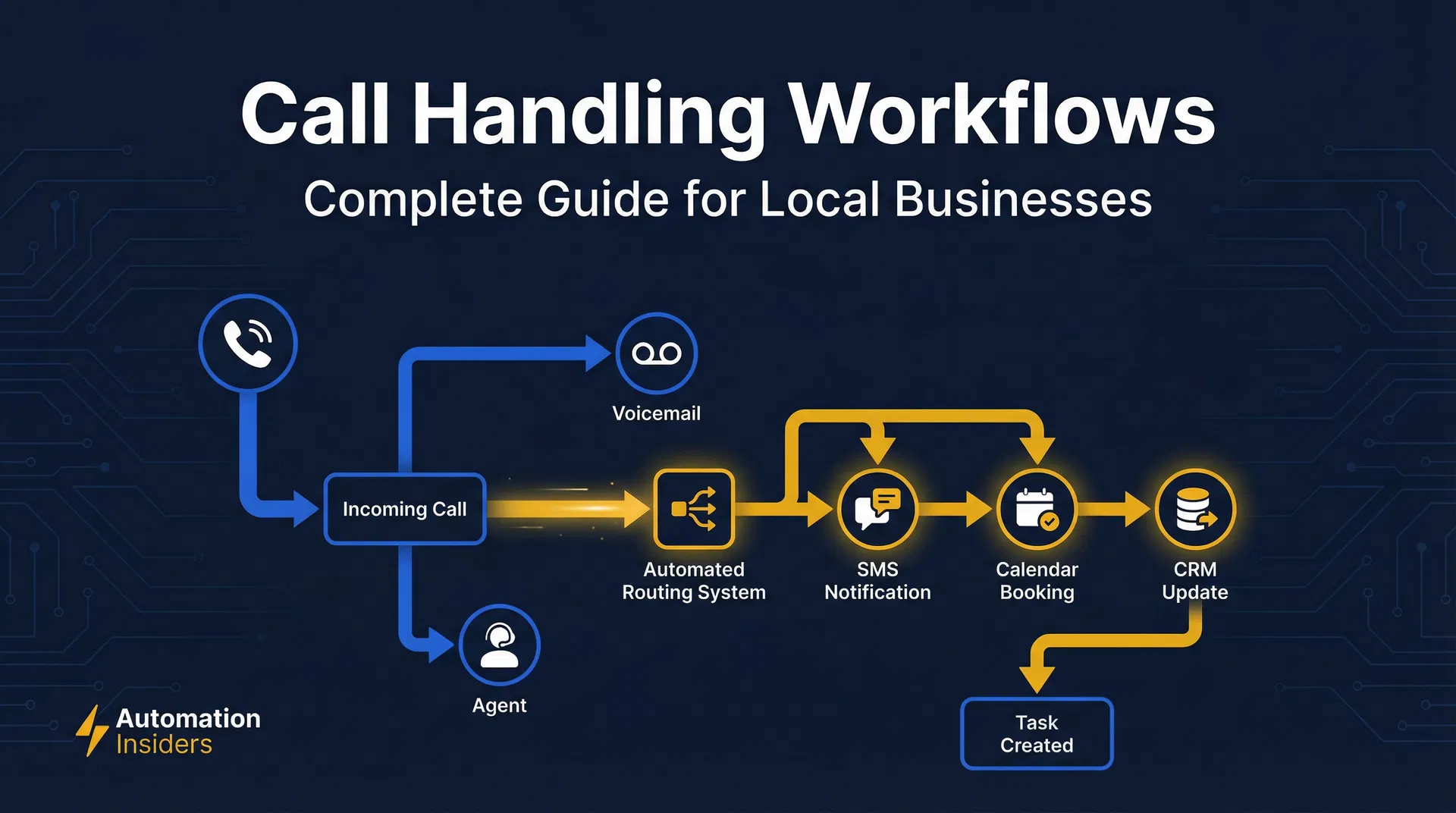
Imagine a customer calling your HVAC business with a broken furnace. Instead of "Press 1 for sales, 2 for service," the AI answers, "Thank you for calling [Your Business Name]. How can I help you today?" When the customer says, "My furnace is broken and it's freezing," the AI understands the urgency, gathers the necessary details like location and availability, and can even schedule an appointment directly into your calendar. This isn't just an answering service; it's a proactive customer engagement tool. It's estimated that businesses using AI for customer service can see a 25% reduction in call handling times and a 30% increase in customer satisfaction. Also, for urgent service calls, the speed of response is critical. Research by LeadResponseManagement.org shows that businesses that follow up with a lead within 5 minutes are 9 times more likely to convert them. An AI call handler can qualify and route urgent calls instantly, dramatically increasing your chances of securing the business.
This isn't about replacing your team; it's about empowering them. AI handles the routine inquiries, filters out spam calls, and pre-qualifies leads, ensuring that when a call reaches your human staff, it's a high-value interaction with a customer ready to book. For instance, the AI can ask a potential roofing client about their roof type, approximate age, and the nature of the damage before transferring them to a sales representative. This means your sales team receives a pre-vetted lead with essential information already gathered, allowing them to focus on closing the deal rather than initial qualification. This efficiency can lead to a significant increase in your team's productivity and conversion rates. You're no longer paying your skilled technicians or office staff to answer basic questions; they're focused on what they do best: serving customers and growing your business. This frees up your valuable human resources to focus on complex problem-solving, relationship building, and high-touch customer interactions that truly drive your business forward. The financial implications are substantial: by reducing the time spent on administrative tasks and increasing the efficiency of your sales and service teams, AI call handling can directly contribute to higher revenue and lower operational costs. A case study by IBM found that companies using AI for customer service can reduce costs by up to 30%.
The choice is clear. You can continue to alienate potential customers and lose revenue with an outdated, frustrating IVR system, or you can embrace the future of customer service with AI-powered call handling. This isn't just an upgrade; it's a strategic investment in your business's growth, customer satisfaction, and long-term profitability. By providing a superior first impression and efficient, intelligent service, you're not just answering the phone; you're building a stronger, more competitive local service business.