
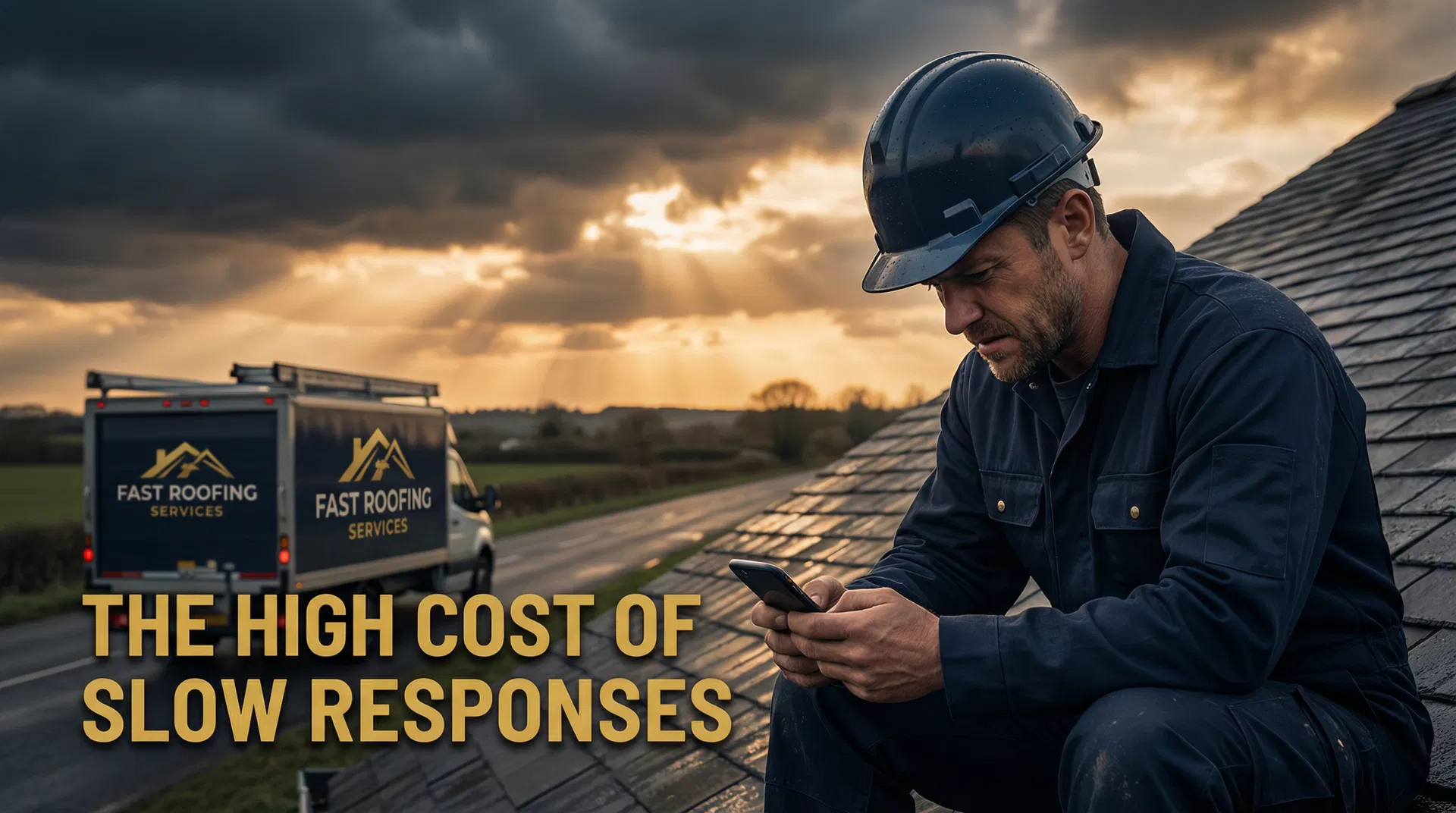
Your phone rings. A new lead, a homeowner with a storm-damaged roof. You're up on a ladder, unable to answer. An hour later, they've committed to another roofing contractor. This common scenario costs your business thousands. It's a gut punch, but it happens all the time.
In roofing, speed to lead follow-up isn't just important; it's absolutely critical. Homeowners are calling multiple contractors; the first one to actually connect usually wins the job. If your business isn't responding within minutes, you're simply leaving money on the table.
The Harsh Reality of Roofing Speed to Lead
Industry data consistently shows that businesses responding to a lead within five minutes are significantly more likely to convert. Wait just 30 minutes, and your chances plummet. After an hour, the odds of even reaching that lead drop by over 90%. This reality hits roofing contractors especially hard.
Think about a homeowner in Dallas after a hailstorm. They're stressed, looking for immediate solutions. They're going to call three to five local roofers, guaranteed. The first one to answer, or even just send a reassuring text, builds immediate trust and gets the first shot at an estimate. Your business needs to be that first responder. Period.
What Losing Three Jobs Per Month Actually Costs
Most owners we talk to assume unclosed leads weren't serious. But are you tracking the cost of slow response? The honest answer is, most roofing businesses aren't, and the numbers are staggering.
Let's quantify the impact. If your business pulls in 40 leads monthly and closes 30% of connected leads (that's 12 jobs), but 25% (10 leads) go unanswered or get a late callback, and 80% of those leads end up with competitors, you're losing 8 jobs every single month.
At an average $10,000 job value, that's a brutal $80,000 in monthly revenue lost—nearly $1 million annually from one operational gap. Even a conservative estimate of 3 lost jobs at $8,000 each means a $288,000 annual hit. This isn't minor; it's a significant drain on your profitability. What could your business do with an extra quarter-million dollars a year? We're talking serious growth.
Why You Can't Always Answer Fast (And Why That's Not the Point)
Look, you’re a roofer. Your hands are busy, often literally, on a roof. Dropping everything to answer every single call is impractical, if not impossible. And that’s precisely the point we're making. The goal isn't for you to answer every call; it's for every missed call to receive an immediate, professional response, even when you're tied up. Automation becomes your most valuable employee, hands down.
When a potential customer calls and you can't pick up, an automated system—like GoHighLevel’s Missed Call Text Back feature—sends a personalized text within seconds. a homeowner calls your business, and 15 seconds later, they receive a text: "Hey, this is [Your Company Name] – sorry we missed your call! We're currently out on a job, but we want to help. What's going on with your roof?"
This immediate message does three critical things for your business:
- Acknowledges urgency: The homeowner knows you're a real, responsive business, not just a voicemail black hole.
- Opens dialogue: Many prefer texting over phone tag. You've started a conversation on their preferred channel, making it easy for them.
- Buys time: The homeowner is engaged, feeling heard, while you finish your task. By the time you're off the roof, you might already have a conversation in progress, or even a booked inspection. That's powerful.
The Automated Follow-Up Sequence for Roofers
A single text is a start, but for maximum lead conversion, your business needs a comprehensive, automated follow-up sequence. This ensures persistence and professionalism, preventing leads from falling through the cracks. Here’s a proven sequence for roofing contractors that we've seen work wonders:
Immediate Missed Call Text Back (within 30 seconds): This is your first line of defense. It opens conversation and immediately understands their need. Example: "Hey, this is [Your Company Name] – sorry we missed your call! We're currently out on a job, but we want to help. What's going on with your roof?"
Follow-Up Text (if no reply within 2 hours): A gentle nudge keeps your business top-of-mind. Example: "Still here if you need us – happy to come take a look at no charge. Let us know if now's a better time to chat."
Final Nudge (the next morning): This is your last automated re-engagement before moving to longer-term nurture. Example: "Just following up from yesterday – let me know if you'd like to schedule a free inspection. We have openings this week."
Post-Estimate Follow-Up (if no booking within 48 hours): Roofing jobs are often decided within a week. A well-timed text can absolutely win the job. Your system automatically sends a text highlighting your proposal's value or offering to answer questions. This is far more effective than a cold call. Actionable Step: Set up GoHighLevel automation to trigger this sequence if an estimate isn't accepted within two days.
Post-Job Review Request: After a happy customer, use that satisfaction immediately. Automated review requests significantly increase 5-star Google reviews. More reviews mean better local SEO, more inbound calls, and more opportunities for your business. It's a no-brainer. Actionable Step: Integrate a review request workflow into your job completion process in GoHighLevel.
This entire system runs on autopilot. Set it up once, and it consistently works for your business, allowing you to focus on what you do best: roofing. Your communication is handled, leads nurtured, and reputation built, all without you lifting a finger.
Storm Season Preparedness
For roofing businesses in storm-prone markets, storm season brings a surge of urgent leads that can overwhelm even the most organized team. When 50 homeowners call after a hailstorm, no human team can effectively respond to all of them.
This is precisely where automation shines. Every single caller receives a personalized text within 30 seconds, acknowledging their emergency and starting a conversation. Every lead is tracked, logged, and strategically followed up. Your business captures the entire surge, turning a chaotic, missed opportunity into your most profitable season. You convert leads instead of losing them to competitors—it's that simple.
GoHighLevel for Roofing Contractors
So, how do you actually implement this automation? We recommend using GoHighLevel, the platform most successful roofing contractors are already using. For around $97/month, your business gains access to tools specifically designed for service businesses:
Missed Call Text Back: This ensures every missed call triggers an immediate, personalized text. No more lost leads, ever. Actionable Step: Set up your custom Missed Call Text Back message in GoHighLevel's 'Automation' section.
Automated Follow-Up Workflows: Build sophisticated, multi-step sequences customized for different lead types. Nurture leads automatically, ensuring consistent communication without any manual effort.
Online Booking Calendar: Empower customers to self-schedule inspections. This eliminates phone tag and is incredibly convenient for them, even after hours. Actionable Step: Integrate your booking calendar into automated texts and your website.
Review Automation: Automatically sends Google review requests after job completion. This is vital for your online reputation and attracts new leads constantly.
Integrated CRM: Tracks every lead, conversation, and job in one centralized system. This gives your business a complete, 360-degree overview.
GoHighLevel effectively replaces a dedicated office administrator for lead follow-up (which would cost you $1,500-$2,500/month). This automated system works 24/7, ensuring your business never misses an opportunity, even during storm surges. It's a significant advantage.
See What You're Losing
Still unconvinced of the impact? The free Missed Call Revenue Calculator at AutomationInsiders.com reveals your exact annual revenue loss from missed calls and slow follow-up. Most roofing contractors are genuinely surprised by the numbers they see.
Once you see the true cost of inaction, GoHighLevel becomes an obvious investment. It’s not just about $97 a month; it’s about reclaiming hundreds of thousands in lost revenue and positioning your business for significant growth.
GoHighLevel offers a 14-day free trial. Implement the roofing contractor speed to lead follow-up system and see immediate results. Get the Missed Call Text Back workflow active and capturing leads today. The next storm doesn't have to be a missed opportunity; it can be your most profitable one yet.
AutomationInsiders.com is a GoHighLevel affiliate. We may earn a commission if you sign up through our link — at no extra cost to you.
If you want to quantify how much missed calls are costing your business, the free Missed Call Revenue Calculator gives you a dollar figure based on your actual call volume and close rate.
For more context, see our local service business automation stack.
To find out where your pipeline is leaking revenue, the free Pipeline Leakage Calculator breaks down your loss by stage so you know exactly where to focus first.
For the exact automation setup that captures roofing leads the moment they call, read our missed call text-back guide. Use our missed call revenue calculator to quantify what slow follow-up is costing your roofing business per month.