
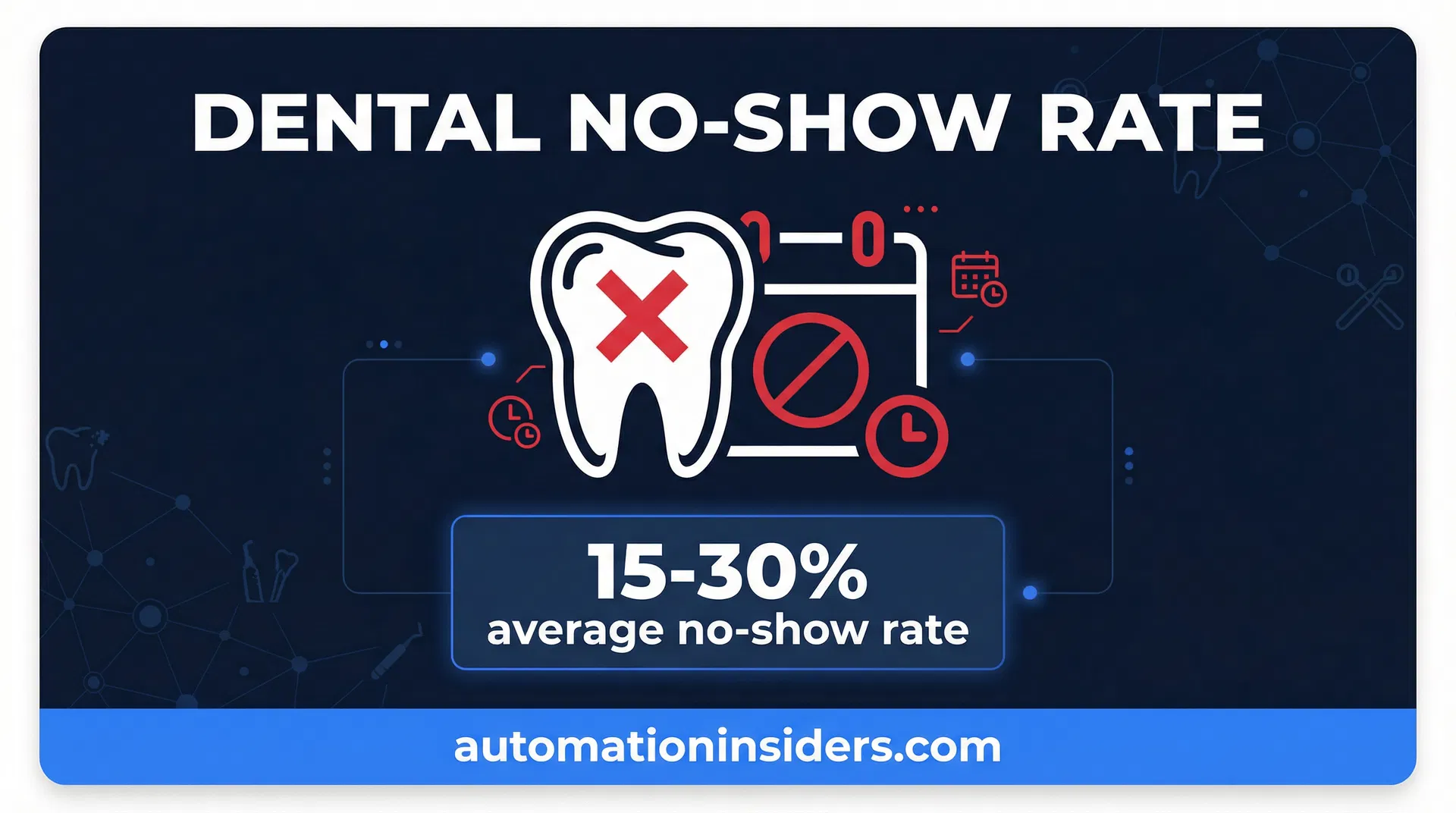
Let's be honest: your dental practice is bleeding cash daily from missed appointments. This isn't just a minor headache; it's a silent killer for your bottom line, potentially costing you hundreds of thousands each year. As a dental practice owner, you've felt that gut-punch of an empty chair and seen the domino effect it has on your schedule, your team, and your revenue. The truth is, getting a handle on your dental practice no-show rate isn't just about running a tighter ship; it's about protecting your financial future and making sure your practice doesn't just survive, but thrives.
The Silent Killer of Dental Profits: Your Dental Practice No-Show Rate
Missed appointments—we call them no-shows—are far more than a minor inconvenience in your day-to-day. For dental practices, they're a big problem, messing up carefully planned schedules, eating up valuable staff time, and, most critically, leading to a serious hit on your revenue [1]. When a patient simply doesn't show, that appointment slot isn't just empty; it's a lost opportunity that directly impacts your practice's profits.
Industry data consistently pegs dental no-shows between 15% and 23% [1]. Let's really break that down for your business. Imagine your average appointment brings in $250. If your practice books 20 appointments daily and you're hitting an 18% no-show rate, you're looking at roughly 3-4 empty chairs every single day. That's a staggering $750-$1,000 in lost revenue, daily. Over a typical 20-day working month, that balloons to $15,000-$20,000. Annually? Your practice could be hemorrhaging $180,000 to $240,000 because of no-shows. This isn't some theoretical exercise; this is the cold, hard reality for most practices. And it doesn't even factor in your constant overheads like rent and salaries, or the lost chance to treat other patients. Frankly, you need to grab control of this situation, now.
Why Patients Ghost Your Dental Chair: Root Causes and Real Solutions
Sure, there are general reasons people miss appointments, but the dental world has its own unique set of challenges that really drive up that dental practice no-show rate. You have to get a handle on these specific triggers if you want to put in place countermeasures that actually move the needle for your practice.
1. The "No Urgency" Factor: Long Booking Windows and Low Stakes
Dental appointments, especially those routine check-ups and cleanings, rarely feel like an emergency. Patients often book these things months out—sometimes three to six months in advance. That huge lead time creates a massive window for life to just... happen: scheduling conflicts pop up, appointments get forgotten, or a cleaning simply gets deprioritized when other commitments scream louder. A patient might casually think, "It's just a cleaning, I can always reschedule," completely missing the operational impact on your practice or the long-term health implications of putting off preventive care. This psychological hurdle is a huge, often overlooked, contributor to your dental practice no-show rate.
So, what's the play here? You absolutely need to close that gap between booking and the actual appointment with consistent, value-driven communication. Don't let your patients forget why their appointment matters.
Actionable Step: Set up a multi-stage reminder system that kicks off weeks in advance. These reminders should include little educational nuggets about why their upcoming visit is so beneficial. For instance, a text two weeks out could read: "Reminder: Your cleaning is coming up! Regular cleanings prevent cavities, gum disease, and keep your smile bright. We look forward to seeing you on [Date] at [Time]."
2. Dental Anxiety and Fear: A Big Problem
Dental anxiety and phobia are rampant, and they contribute a lot to no-shows. For many, the mere thought of a dental visit—whether it’s due to a past bad experience, fear of pain, or just general discomfort with procedures—can be utterly overwhelming. This anxiety often shows up as procrastination, leading patients to simply avoid confirming or, worse, just not showing up. Even for routine check-ups, that apprehension can be strong enough to completely override their intention to attend. We have to recognize that this isn't always a conscious decision to disrespect your schedule; it's often a powerful emotional response that demands empathetic handling.
So, what do we do? Your practice needs to create an environment of trust and understanding, actively tackling patient fears before they result in a no-show.
Actionable Step: Train your front desk team to spot signs of anxiety during booking and initial calls. Offer a pre-appointment chat to talk through concerns, or point them to resources on managing dental anxiety. Consider putting together a "comfort menu" for anxious patients, with options like cozy blankets, noise-canceling headphones, or even a quick tour of the operatory before their appointment. We’ve seen practices, like one in Scottsdale, Arizona, slash no-shows for anxious patients by 10% just by having a dedicated "comfort coordinator" proactively reach out to these individuals.
3. Scheduling Conflicts and Life Changes: Life Happens
Life, as we all know, is anything but predictable. When appointments are locked in far in advance, the chances of unexpected scheduling conflicts skyrocketing are huge. Work demands shift, family emergencies crop up, or personal plans simply change. Without a straightforward and flexible way to communicate these changes and reschedule, patients often just find it easier to not show up. This is especially true for busy professionals or parents who are constantly juggling multiple schedules. The hassle of rescheduling, or even the fear of cancellation fees, can sometimes push patients down the path of least resistance: the dreaded no-show.
So, what’s the takeaway? Your practice’s ability to roll with these changes and offer convenient rescheduling options directly impacts your dental practice no-show rate. Make it a no-brainer to reschedule rather than to simply skip.
Actionable Step: Set up an online rescheduling portal or a system where patients can simply reply to a text message to ask for a new time. This puts the power in their hands and significantly cuts down on the administrative load for your staff. For example, a text could suggest: "Need to reschedule? Reply 'RESCHEDULE' or visit [YourWebsite.com/reschedule] to find a new time that works for you."
4. Lack of Perceived Value or Understanding: Patient Education is Key
Some patients just don't fully grasp how crucial consistent preventive dental care is for their overall health. They might see routine check-ups and cleanings as optional, or only necessary when they're in pain. This lack of understanding about the long-term benefits of catching issues early can lead to a pretty casual attitude toward appointments. If a patient doesn't see the immediate value, they're far less likely to prioritize that visit, making them more prone to forgetting or simply canceling. The long-term health implications of putting off preventive care are serious, ranging from a higher risk of cavities and gum disease to more significant systemic health problems like cardiovascular disease and diabetes, which we know are linked to poor oral health.
So, what's our job here? We need to constantly educate our patients on the direct connection between their oral health and their overall well-being. This transforms their perception of dental visits from a dreaded chore into a vital investment in their health.
Actionable Step: During appointments, use simple analogies and visual aids to explain the long-term benefits of regular check-ups. Share success stories of patients who avoided major issues through preventive care. Send out monthly newsletters with engaging content about oral health tips and the importance of regular visits. A dental group in Austin, Texas, started showing short, animated videos in their waiting room about the link between oral health and overall health, which they attributed to a 5% increase in appointment adherence for new patients.
The True Cost of Missed Appointments in Dentistry: A Hard Look at Your Bottom Line
Beyond the immediate revenue hit from a single missed appointment, the total financial impact of a high dental practice no-show rate can be absolutely staggering. Let’s break down the real cost with a concrete example that should resonate with your practice.
Consider a dental practice just like yours, with:
- Average appointment value: $250 (a pretty realistic figure for many practices, in our experience)
- Daily appointments: 20
- No-show rate: 18% (right in the sweet spot of the industry benchmark, which hovers between 15%-23% [1])
- Working days per month: 20
Daily Loss:
- Number of no-shows per day: 20 appointments * 18% = 3.6 no-shows (let’s round that up to 4 for a more realistic, and frankly, painful scenario)
- Revenue lost per day: 4 no-shows * $250/appointment = $1,000
Monthly Loss:
- Revenue lost per month: $1,000/day * 20 working days = $20,000
Annual Loss:
- Revenue lost per year: $20,000/month * 12 months = $240,000
This isn’t just some abstract math; this is a quarter of a million dollars that could be flowing back into your practice, used for well-deserved staff bonuses, or simply boosting your personal income. And this doesn’t even begin to cover the ripple effects: wasted staff wages, reduced productivity, and the inability to schedule other patients who would have shown up. The economic impact stretches to those fixed overhead costs—rent, utilities, salaries—that keep ticking whether a patient is in the chair or not. This is precisely why effectively managing your dental practice no-show rate isn’t just good practice; it’s absolutely critical for your profitability and, let’s be honest, your peace of mind.
Actionable Strategies to Reduce Your Dental Practice No-Show Rate
Cutting down your dental practice no-show rate demands a multi-pronged attack. We’re talking proactive communication, clear policies, and consistent patient education. Here are 5 specific, actionable strategies, custom-built for your dental practice:
1. Optimized Reminder System with Multi-Channel Communication
Given that most dental appointments are booked well in advance, a rock-solid reminder system isn't just helpful; it's absolutely critical. You simply can't rely on a single reminder and hope for the best. Instead, use a multi-channel approach that reaches patients wherever they are, whether that's their inbox or their pocket.
- Immediate Confirmation (Email/Text): The moment a patient books, fire off an email or text confirming all the appointment details. This solidifies the booking and gives them a quick reference. Think: "Thanks for booking with [Your Practice Name]! Your appointment is confirmed for [Date] at [Time]. We can't wait to see you!"
- Two Weeks Prior (Email/Text with Value Add): A gentle nudge that their appointment is coming up. This is a prime opportunity to include a link to any patient forms they can fill out beforehand, cutting down on in-office wait times and showing you respect their time. Something like: "Just a friendly reminder about your upcoming dental visit on [Date] at [Time]. Save time by completing your forms online here: [Link to Forms]."
- 3-5 Days Prior (Text/Email with Confirmation Request): This is your make-or-break reminder. Ask for a clear confirmation reply (e.g., "Reply Y to confirm, N to reschedule"). This proactive engagement helps you catch potential no-shows early, giving you a chance to fill that slot. Try: "Your appointment with Dr. [Dentist's Name] is on [Date] at [Time]. Please reply Y to confirm or N to reschedule."
- 24-48 Hours Prior (Text/Call): Your final reminder. For those who haven't confirmed, a personal phone call can be effective for sorting out any last-minute issues or getting that final confirmation. For patients you know struggle with anxiety, a reassuring tone here can make all the difference. A simple: "Hi [Patient Name], this is [Your Practice Name] reminding you of your appointment tomorrow at [Time]. Please call us at [Phone Number] if you have any questions."
Message Tone: Keep your messages professional, but don't be afraid to be friendly. Ditch the overly clinical jargon. Personalize messages whenever possible, using the patient's name. We've seen practices, like one in Portland, Oregon, drop their no-show rate by 7% just by making their reminder texts sound more human.
2. Clear and Empathetic Cancellation Policy
Your cancellation policy needs to be crystal clear, concise, and communicated effectively right when a patient books, and then again in your reminders. But here’s the kicker in dentistry: empathy is critical. While a fee for late cancellations or no-shows can certainly act as a deterrent, we’ve found it’s often wise to consider a grace period or even a one-time waiver for your long-standing patients or in genuine emergency situations. The real goal here is to encourage open communication, not to needlessly penalize patients. Make sure you clearly explain the impact of missed appointments, not just on your practice, but on other patients who could have used that slot. The best approach, is to be firm, but always understanding.
Actionable Step: Draft a single-page, easy-to-digest cancellation policy document. Have all new patients sign it, and include a brief summary in every appointment reminder. For example: "Please notify us at least 24 hours in advance if you need to cancel or reschedule to avoid a cancellation fee and allow us to offer your time to another patient."
3. Patient Education on Oral Health Importance
Let’s tackle that "no urgency" factor head-on by consistently educating your patients about just how vital preventive dental care is. During their appointments, take the time to explain the long-term benefits of regular check-ups and cleanings, and don't shy away from outlining the potential consequences of putting off treatment. Use visual aids or simple analogies to make complex information easy to digest. When patients genuinely understand the value, they’re far more likely to prioritize their appointments. This approach also plays a huge role in bringing down your dental practice no-show rate by instilling a sense of personal responsibility.
Actionable Step: Create a series of short, engaging educational videos or infographics. Display them in your waiting room or share them across your social media channels. Focus on topics like "The Hidden Dangers of Skipping Your Cleaning" or "How Oral Health Impacts Your Heart." At the end of each appointment, offer a quick, personalized summary of their oral health status and highlight the benefits of their next scheduled visit.
4. Streamlined Rescheduling Process
Make it ridiculously easy for patients to reschedule if a conflict pops up. A clunky, frustrating rescheduling process is a one-way ticket to a no-show. You absolutely need to offer multiple, super-convenient options to turn a potential no-show into a successfully rescheduled appointment.
Actionable Step: Give them a direct phone number, an online portal, or even the option to simply reply to a text message. Consider embedding a "Reschedule Now" button right into your email reminders that links directly to your online booking system, showing real-time availability. This empowers your patients and drastically cuts down on the administrative burden for your staff.
5. Building Strong Patient Relationships: Fostering Trust and Accountability
Beyond just the transactional stuff, genuinely cultivating relationships with your patients can be an incredibly powerful weapon against no-shows. Think about it: patients are far less likely to blow off an appointment with a practice where they feel valued, heard, and connected. This goes way beyond just clinical excellence; it touches every part of the patient experience, from the warm welcome they get from your front desk staff to the empathetic chairside manner of your dental team. Remembering little personal details, engaging in friendly banter, and showing genuine care can completely transform a patient’s perception of their dental visit from a dreaded chore into a valued interaction. This personal connection builds a sense of accountability, making patients much more inclined to honor their commitments or, at the very least, communicate if they need to reschedule. a strong patient-practice bond is the most often-underestimated factor in slashing your dental practice no-show rate.
Actionable Step: Put a system in place for your staff to jot down personal details (e.g., "patient mentioned their child’s soccer game") so they can bring it up during future visits. Send out personalized birthday greetings or holiday cards. Encourage your team to spend just an extra minute building rapport with each patient. We even heard about a small dental office in rural Georgia that saw its no-show rate plummet by 15% after actively focusing on building deeper personal connections with every single patient.
GoHighLevel: Automating Your Way to Fewer Dental No-Shows
Look, trying to implement all these strategies manually? It’s a time sink and, let’s be real, ripe for human error. This is precisely where automation platforms like GoHighLevel become absolutely invaluable for dental practices serious about slashing their dental practice no-show rate. GoHighLevel isn’t just another tool; it’s a comprehensive suite designed to streamline patient communication and appointment management, making your practice not just more efficient, but your patients far more engaged.
Here’s how GoHighLevel directly tackles the no-show problem for your business:
- Automated Multi-Channel Reminders: GoHighLevel can automate your entire reminder sequence across SMS, email, and even voicemail drops. You get to customize the timing, frequency, and content of these nudges, ensuring patients get timely reminders without you lifting a finger. This, drastically cuts down on forgetfulness, which is a primary culprit behind dental no-shows. You can easily set up a workflow in the ‘Automation’ section to trigger these reminders automatically.
- Two-Way Communication: The platform isn’t just about sending messages; it facilitates genuine two-way communication. Patients can confirm, reschedule, or cancel appointments directly through text or email replies. This ease of interaction reduces friction and actually encourages patients to communicate changes instead of just disappearing.
- Automated Rescheduling Links: We love this feature. You can embed direct links within your reminders that let patients reschedule their appointments online, seeing available slots in real-time. This empowers patients and significantly reduces the administrative burden on your staff, freeing them up for more critical tasks.
- Patient Engagement Workflows: Beyond just reminders, GoHighLevel can build automated workflows for everything from patient onboarding to post-appointment follow-ups and recall campaigns. These aren’t just bells and whistles; they help forge stronger patient relationships and reinforce the value of consistent dental care, directly addressing that pesky lack of perceived value. By using GoHighLevel, your practice can proactively manage its dental practice no-show rate and ensure a fuller, far more profitable schedule.
Reclaiming Your Schedule and Revenue: The Path Forward
Your dental practice no-show rate is, without a doubt, a formidable beast. But here’s the good news: it’s absolutely not an insurmountable one. By understanding the specific, often unique, reasons why dental patients skip appointments, by accurately crunching the numbers on the financial hit, and by putting strategic, actionable solutions into play, your practice can dramatically slash its no-show rates. And when you layer on automation platforms like GoHighLevel, these efforts aren’t just amplified; they transform a reactive problem into a proactively managed, and profitable aspect of your practice.
Don’t let those missed appointments keep eating away at your practice’s profitability and efficiency. It’s time to take back control of your schedule and your revenue by implementing these strategies today. For a deeper dive into what the industry benchmarks look like, make sure to explore our comprehensive article on Appointment No-Show Rate Benchmarks by Industry. And to fine-tune your reminder system even further, you’ll want to consult our Automated Reminders Guide.
Ready to really quantify the impact of no-shows on your practice and see firsthand how GoHighLevel can be a significant advantage? Go ahead and use our free No-Show Cost Calculator to get a clear picture of how much those missed appointments are costing you. Then, why not explore a free trial of GoHighLevel and put these solutions into action?
References
[1] Alabdulkarim, Y. (2022). Predicting no-shows for dental appointments. PMC - NIH. Retrieved from https://pmc.ncbi.nlm.nih.gov/articles/PMC9680883/
Before investing in any CRM or automation platform, run the numbers with the free CRM ROI Calculator to see your projected return based on your current lead volume and close rate.